Question: Does the Bible teach reincarnation? For example, wasn’t John the Baptist the reincarnation of Elijah?
My Answer: A brief answer is simply, no. But let’s explore this a little bit. Continue reading

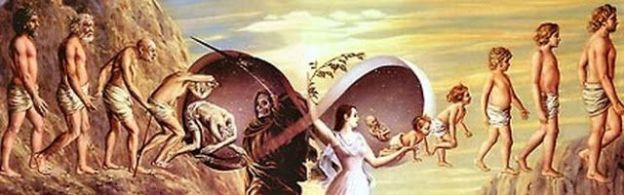
Question: Does the Bible teach reincarnation? For example, wasn’t John the Baptist the reincarnation of Elijah?
My Answer: A brief answer is simply, no. But let’s explore this a little bit. Continue reading

Several years ago I set myself the task of writing an essay without using the letter “e.” It was more daunting than I thought it would be. It became a real challenge. I had to read and reread my drafts over and over. Those pesky little critters (“e’s,” that is) kept creeping in everywhere. I would be sure that I had expunged them all. “Out, you varmints!” And then, lo and behold, another one! It took a while to finish that piece.
After that experience, I wanted to again do something difficult. So I decided I would challenge myself again. But how? Then I hit upon an idea. I would write about nothing. Hmmmmm! Here are the results of my meanderings in the realm of nothingness. Continue reading
In August of 2009 Newsweek magazine published an article entitled “We Are All Hindus Now.” It pointed out that many of the beliefs of an eastern worldview are now popular in our country. For example, most Americans believe that the various world religions are simply different paths to God, and that all religions are basically the same. This is a perspective that is common in the East, but a latecomer to what has been traditionally a Judeo-Christian culture. Even though most Americans self-identify as “Christians,” the reality is we are more and more Eastern in our worldview. Continue reading
One of the most common buzz words going around today in the fields of health, medicine and psychology is mindfulness. You hear it popping up in discussions on wellness, nutrition, education, business, sports, etc. Seminars, classes and conferences are being offered at universities, medical centers, and professional organizations around the world. For example, in May of 2004 the National Institutes of Health held a daylong symposium called “Mindfulness Meditation and Health.” The original mindfulness program developed at the University of Massachusetts Medical Center is now used by over 700 hospitals worldwide.[1] It is obviously something that is very popular. Continue reading
“What is the sound of one hand clapping?” “If a tree falls in the forest and there is no one there to hear, does it make a sound?” Ever hear these odd questions? We usually think of them as silly, humorous, even nonsensical statements. What most people don’t realize is that these are genuine expressions of Zen Buddhist belief. Called koans, these questions are meant to cause a person to go outside rational thought and experience an intuitive understanding of reality. This flash of spiritual perception, called satori, is the goal of the Zen practitioner. Zen teaches that enlightenment is not basically a matter of belief, or intellectual comprehension. Instead, it is a non-rational experience of the divine, of recognizing one’s own identity with “the all.” It is emptying the mind of thought so that a person comes into an immediate perception of ultimate truth. One man defined Zen practice as “concentration with an empty mind.” Continue reading
 TRUTH BUILDERS MINISTRIES