Monthly Archives: March 2013

Christian Science

According to her own account, in 1866 Mary Baker Eddy had a serious fall which endangered her very life. As she lay suffering, near death, she suddenly had a revelation—illness, pain, sickness and death have no reality. They are illusions. They do not exist at all. Eddy supposedly arose from her bed of affliction, completely healed. And full of determination to proclaim to the world her new truth.

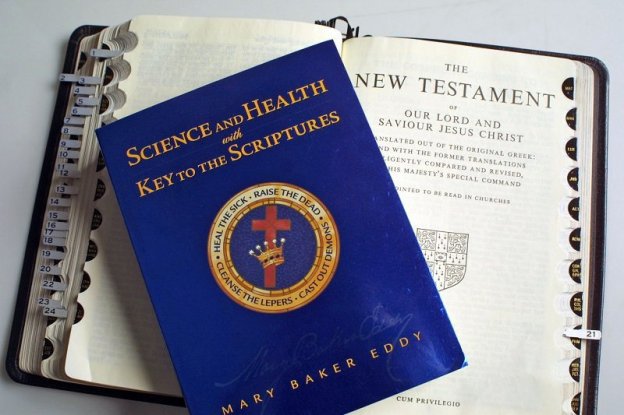
In 1875 she published her magnum opus, Science and Health: With Key to the Scriptures. She claimed this book was divinely inspired, and even more authoritative than the Bible. In 1879 she founded the Church of Christ, Scientist. She claimed she was restoring the true doctrine of Christ, which consists of a “scientific” understanding of the nature of God, sin, sickness and mental health. She was strongly influenced by a faith healer named Phineas P. Quimby, a well-known mesmerist. She mixed mesmerism, positive confession, pantheism and Gnostic ideas into her “scientific Christianity.” Basically, Eddy denied the existence of the material, physical universe. Much like Hinduism or Buddhism, she saw matter, sin, evil, sickness, and death as illusory things. They have no reality, but are only errors in thinking.

As a result of this understanding, she denied the Incarnation of Christ, as well as His atoning sacrifice and resurrection. There is no need for a blood atonement or payment for sin because sin and evil do not actually exist. Where does Christ fit in this scheme? He is an expression of God’s mind; He is the divine Idea. Much like Gnosticism, Eddy asserted a wholly spiritual conception of the Savior. As for salvation, again like Gnosticism, the problem is not the need for redemption, but instead for more knowledge. Ignorance and error are the culprits, not sin and fallenness.

Unfortunately, despite all her assertions of the power of faith and positive mental energy, the history of Eddy shows her to be a woman bound by paranoia, fits of depression, chronic physical afflictions, and emotional traumas. She died in 1910, but her church and her legacy linger on. Although Christian Science has dwindled somewhat in numbers, the doctrines of the movement have dramatically influenced other cultic systems, e.g., New Thought, Unity, Divine Science, the New Age Movement, and many other healing and metaphysical groups.

Summary of Beliefs

God: A pantheistic concept of God. God is everything. All that exists is mind. And
God is mind. The idea of the Trinity is pagan.
Jesus: A overly spiritualized, Gnostic idea of Christ. He is the divine Idea. No incarnation,
because matter does not exist. Also, no resurrection. Christ’s blood does not save from
sin. Christ’s atoning work is unnecessary, because sin does not exist.
Salvation: To free yourself from the false illusion that matter, evil, sin and sickness actually
have existence.
Human nature: Man is a spiritual being. There is no material existence.
Sin: A false idea. Sin and evil are only illusions.
Afterlife: Eternal life is to exist as spiritual beings, free from material illusions.
Scripture: Eddy’s book Science and Health is considered a revelation on par with the Bible.
Medicine: “Scientists” are noted for not believing in medication, doctors, vaccinations, etc.
This has often caused Eddy’s followers to end up in court, when these beliefs affect the
lives of sick children.
Truth: Revealed through Eddy and her works.

Trees of Life

I have been doing a lot of thinking about trees lately. My ruminations go back to when I read a book called America’s Famous and Historic Trees. This book chronicles the story of trees that are associated with famous historical figures or events, such as the tulip poplar that George Washington planted at Mount Vernon, or the Honey Locust where Lincoln delivered the Gettysburg Address. I even found out there are places where you buy seeds from these historic trees. Imagine, you can plant a tree in your yard that is an offspring of the actual magnolia Andrew Jackson planted in front of the White House, or have a pin oak that comes from Graceland, or sit under the shade of a red maple from Walden Woods where Thoreau lived and wrote.

I have seriously considered purchasing one of these famous trees. It is the Stonewall Jackson Prayer Oak. The seedlings are grown from a tree in Virginia’s Shenandoah Valley. It was here, during the Valley Campaign, that Stonewall Jackson would retire early in the morning to begin his day in prayer. (In case you didn’t know, Jackson was a devout Christian man. He actually would not go into battle on Sunday because he did not want to dishonor the Sabbath!)

There is something comforting about trees. They evoke feelings of confidence, strength, stability. When all of life is insecure and chaotic, trees stand as steady reminders of realities that are permanent and sure. There is integrity in a tree; character in its limbs and virtue in its branches. No wonder the Scriptures use trees as emblems of the security found in righteous living.

I remember the trees I knew as child. I grew up in the suburbs of Richmond. We lived on a fair-sized piece of property—actually three lots that totaled about an acre of land. Our yard was filled with plants of all kinds. My mother had a green thumb extraordinaire. She was one of those people who seemed to be able to revive a nearly dead plant just by touching it. I fondly remember the flourishing beds of irises, jonquils, hyacinths and tiger lilies. And the roses! My… the wondrous sight and smell of those roses. My mother loved roses, and they appeared to love her in return. They thrived under her care. And then there were the trees. Lots of trees.

Some of the trees in our yard my father planted… apple and plum and cedar. But most of the trees were already there when we moved in. In fact, it was the attractiveness of the yard, with all its flowers and plants that first attracted my mother to this place. Including the trees. It was like they had grown there in anticipation of being loved by her, by all our family.

The first of these trees that I remember was a stately pecan tree. It grew very close to our back door. It was very tall, towering over our two-story home. Its limbs sort of embraced the back of our house. Its shade cooled the exterior, and provided a wonderful place for social gatherings. In my mind I can still see family reunions, neighborhood parties, special celebrations, yard sales and picnics—all being enjoyed under the shade of that noble old pecan. I don’t know its age, but it must have been ancient to be as large as it was. In addition to its shade, it annually provided us with a rich harvest of nuts, tons of leaves to rake in the fall, and hours of rest under its shade. My bedroom was at the rear of the house, so I grew up looking out at the world through its boughs. You might say that much of my early view of life was seen through the branches of this pecan tree. My perspectives and attitudes were colored by the greens and yellows of its leaves, framed by the wintry bareness of its branches. I loved, and still love, that old tree.

We had other nut trees. Not too far from one corner of the house was an English walnut. I can still see its yellow foliage in autumn. I can still recall the pungent odor of its leaves when crushed in my curious hands. And I remember when it fell, toppled by a high wind. In a valiant effort at life, the trunk produced small branches with gigantic leaves the next summer. But it was a futile attempt, and sadly the trunk had to be cut down. Stretching out from the trunk of the English walnut was a grape vine that produced a deliciously sour grape. It made excellent juice and jelly. This vine ran from the English walnut straight back through the yard until it almost touched the trunk of another walnut tree, a black walnut tree this time. No child should grow up without playing with the grimy, messy, slimy husks of a black walnut. What loads of dirty fun! I think that black walnuts may be a good symbol of life. You have to get through all the junk and crud to get at the meat, the yummy kernels of joy in life.

In our front yard there was a handsome old cedar. It was ancient enough that there were no branches anywhere near the ground. They were all very high up. This tree also suffered damage from a wind storm. We had the remnants of a hurricane come through. However, by the time the system reached Richmond, its worse winds were mostly spent and, oddly enough, only blowing at tree top level. We felt nothing at ground level, but up in the trees there was whistling and wailing as the winds rocked the tops of the trees back and forth. This old cedar fought the winds with resolve. But it was a losing battle. The very top of the tree broke off, its future now determined forever. It would not grow to any greater heights. But there was different fate in store for this patrician plant. For years we watched as a wisteria vine climbed its way up the height of this cedar until it reached the very top. And then when the wisteria would bloom! My! What an incredible sight. A lavender sheet of floral flame from ground to treetop glory. You may think I exaggerate, but I do not. We actually used to have people stop, pull their cars over, and get out just to gaze on this botanical wonder. It was truly awesome.

It occurs to me that this cedar also has a life lesson for us. Sometimes the hurricane forces of life seem to cut us off, block our growth, and kill our potential to reach the high places of life. But God in His great wisdom always has a better plan. Our stifled potential may only be an opportunity for great beauty to be produced in our lives. How awesome is our God!

I must hasten on if I am to even briefly mention some of the other trees in this child’s garden of Eden. There was the damson tree with its sweet fruit. (If you don’t know what a damson is, just imagine a small plum-like fruit.) There was a gorgeous apple tree, with the most delicious apples I have ever eaten. What dear memories I have of throwing apples in juvenile mock wars, mouth-watering fried pies, and soothing hugs amidst tearful wails given to lessen the pain of yellow jacket stings—all gifts of this kindly tree. There was the red bud tree with its heart-shaped leaves, exotic seed pods, and purplish blossoms. This must have been a very old red bud, for its trunk was thick and its branches sturdy. It was the perfect climbing tree for a young child. It stood in a comely row, between a majestic holly and a gorgeous crepe myrtle. What a charming tree that crepe myrtle was. And how I miss those hot-pink blossoms that announced the midpoint of summer, a cheerful sight on muggy days that were otherwise miserable. (I know I shouldn’t say this—I should be thankful for all seasons—but I do hate the heat of summer. I often say, I know I don’t want to go to hell. I can’t even tolerate July!)

Perhaps that book on historic trees is not the only reason trees are prominent in my mind right now. Lately, life has been somewhat chaotic. The past few months have been very busy… seminars, classes, preaching, traveling. I have done quite a bit of counseling. There have been people struggling with discouragement, depression and emotional trauma. And I often have felt very stressed. But then I remember, the words of the Psalmist, speaking of the man who walks a righteous spiritual path….

“He shall be like a tree planted by the rivers of water, which brings forth fruit in season, his leaf also shall not wither and whatever he does shall prosper.”

And then I remember, that despite all the winds and storms of life, there is a sureness and steadfastness to be found in trusting in our great God… the Lord of life who created trees. It gives me hope and confidence. The One who made the oak also made me. And He will carry me through this time of stress and busyness. I can rely on Him.

And so…

I think I will go out into the woods, far from all people and traffic and human noise, and find a tree. I will sit in its shade, lean against it solid trunk, and learn of strength from its steadfast stand. I will let its leafy arms shield me from the blowing worries of life. I will revel in the beauty of its branches. And I will worship the God who wisely made trees.

It’s The Right Thing To Do

Do you recall the Quaker Oats commercial from a few years back? Wilford Brumley, mustachioed and rugged looking in his jeans and cowboy hat, lauds the virtues of oatmeal. Listening to him, you’d think oatmeal was a panacea for all ills, an ambrosia sent down from Olympus to cure mankind. And he’d always finish his spiel by saying, “It’s the right thing to do.” I like that slogan. It’s like Nike’s “Just do it.” I wish some Christian group had come up with it first.

I guess I like “It’s the right thing to do” so much because in very succinct terms it captures the essence of so much spiritual truth. Much of the Christian life could be summed up in this phrase. There are commands and instructions and obligations that God gives us in His word and expects us to do. Why? Because it’s the right thing to do. We should obey and do these things not because they make sense to us, not because they are easy, not because we enjoy doing them, and most certainly not because everyone else is doing them. (In fact, most of time others are not doing them.) We should do them because God says so… and Father really does know best! However, I have observed that there is a tendency among Christian believers to willfully disobey God’s clear instructions, and then justify their disobedience with excuses that seem reasonable, at least to them. Allow me to illustrate with a few real life situations.

A good while back, several years in fact, we had someone come by our church in Pennsylvania seeking a handout. If you were to hang around any church for a time you would become accustomed to this experience. Needy people (or sometimes people pretending to be needy) are commonplace. And churches are a ready source of help. However, this particular fellow was not a model example of someone you would want to help. He seemed to think we owed him something. He was a tad surly, and not very pleasant. Yet, despite his demeanor, in Christian charity we still tried to help him. One of things he asked for was food. We prepared several sandwiches for him. He requested a soda (or “pop” in Pennsylvanese). The only thing we had available were some cans of Sprite, but we got together what we had. However, when we gave him the sandwiches and the soft drinks, you could tell by the expression on his face he was not happy with our offerings. He left huffily, grumbling as he went. Then as he went around the corner of the building, we saw him throw the sandwiches in the bushes and drop the bag of pop in the dirt.

You can imagine our irritation. We were right in the middle of busy project for the church. Time was pressing. But we sacrificed our time and energy (and food) to help this man in need. And that sacrifice, given in compassion, was spurned and disdained. It was enough to make you want to ignore the next charity case that would come along. In such a situation, your own flesh rises up and says forget this charity stuff. It’s not worth it.

Another illustration comes from a conversation I had with someone a few years back. I remember we were talking about the Decalogue’s injunction to “Honor your father and your mother.” The person I was talking with is a knowledgeable and sound Bible teacher. But he was curious about some of the material he was using as a reference source. This material, although stating the plain sense of the command, spent quite a bit of time emphasizing the need for parents to be honorable. The author of this material focused much of his teaching on parental responsibility towards their children. He stressed how important it was for parents to have such integrity and character that their children will want to honor them. Considering America’s many instances of child abuse, the huge number of dysfunctional families we have, and the explosive statistics showing that our families are in real crisis, it seems that this author has a valid point. Perhaps we should reread the Ten Commandments, especially number 5, with a view to the current social and domestic realities. Can children really be expected to honor their parents when their parents are not in the least honorable?

The third situation comes out of another conversation with a Christian businessman. This occurred many years ago, but it is still fresh in my mind. I remember this man discussing the side jobs he did in addition to his regular work. He bragged about the fact he was paid for these jobs in cash, and never reported them on his income tax. His justification seemed reasonable. After all, isn’t our government corrupt, run by immoral politicians who only abuse their office? And doesn’t the government spend our taxes on things that we object to as Christian believers? Doesn’t the state fund abortion? And immoral sex education programs? And welfare programs that only foster laziness? And trade with godless regimes, such as Red China? In view of such gross abuse of public funds, it would appear that to withhold tax revenue from Washington is really a righteous act. Isn’t it?

Three situations. Three suggested solutions. Forget helping the needy, the church is only exploited by ungrateful people. Honor your parents, but only when they are honorable. Forget paying your taxes, the government doesn’t deserve them.

Sound godly? Seem righteous?

It’s not. It is the height of hypocritical, disobedient rebellion. It is sin.

God did not say, give to those are sophisticated, noble and polished. He did not even say give to those who are grateful and appreciative. He did say, “Do not forget the poor!”

God did not say for us to honor our parents when they seem to us to be deserving of honor. Instead he said something very simple and straightforward: “Honor your parents.”

God did not say to pay taxes when the government is pure and holy. He did say, “Provide things honest in the sight of all men,” and “Give taxes to whom taxes are due.”

That is His word. These are His commands. They are not conditional expectations, they are the forthright, plain mandates of God to His children. He doesn’t expect us to engage in sanctimonious casuistry, or seek philosophical justifications for why we should or should not heed certain commands. He just expects us to obey.

Why should we obey? Mainly because God has commanded these things. He is God, the Almighty, the Lord, and what He says goes. ’Nuff said. That’s it.

Also, I should obey because THE FATHER really does know best. When He straightforwardly mandates an action for me to do, a behavior He expects from me, I can count on it not only fulfilling His righteous commands but that it is the best possible course of action for me personally. I always benefit when I obey Him. What He expects of me is always for my good, as well as doing right by and for others. You can’t go wrong doing what God asks you to do.

But yet, there is a further reason. I should obey because I am His child. If I am truly born again, truly regenerated, and truly changed by a personal encounter with the living Jesus Christ, then I am to live and act accordingly. I do what is right because of who I now am in Jesus. I obey because I am His. And since I belong to Him, He expects me to do His will.

Let’s apply this concept to our three situations. The ungrateful man who trashed the food we gave him: Should I refuse to give to others because they also might be ungrateful? No. I don’t give to them because they are appreciative of my compassion. I give to them because I am an obedient child of God. Should parents be people of integrity and worthy of honor? Certainly. But I don’t honor my parents because they are worthy of honor. I honor them because I am told to do so, and to obey this command is to make me an honorable person. Is the government too often corrupt and evil? Yes, indeed. But the character of the government is not at issue when it comes to paying taxes. God tells His children to yield to civil authority and to show honor to authorities, specifically in the matter of finances (see Romans 13:1-7). I pay taxes not because politicians are men of character, but because I am a person of character.

I must treat my neighbor, my parents, my leaders in a certain way because God says so. And I do so not because of who they are, but because of who I am. I do this, I obey His commands, because it is the right thing to do!

Will We Know Each Other In Heaven?

Question: “I have been told that when we get to heaven that we won’t really know each other—that we will know each other as brothers and sisters in Christ, but not as the same people we are now. Is this true? Will I know my loved ones? And will they know me?”

My Answer: This is a fairly common question. Through the years I have been asked it many times. First, the simple answer: YES! You will know others in heaven, and they will know you.

But don’t take my word for it. Let’s see what the Scripture says. Is there Biblical warrant for believing that we will know each other in the afterlife, and recognize friends and loved ones? I believe there is a strong case for this being so.

In the account of Jesus’ Transfiguration, he was seen with Moses and Elijah (Matthew 17:17:3). Moses had been dead for over a thousand years, yet the disciples knew him to be the Lawgiver of Israel, not some names Hebrew saint.

Jesus said that “many will come from the east and west and sit down with Abraham, Isaac and Jacob in the kingdom of heaven” (Matthew 8:11). Again, the patriarchs are called by name, they still have their personal identities. It is Abraham, himself; Isaac, himself; Jacob, himself who sits with the gathered saints of God.

In the story Jesus told of the rich man going to hell, the Lord said that he lifted up his eyes and he saw Abraham and Lazarus (Luke 16:23). The rich man recognized both the patriarch, who had died centuries before, and Lazarus, with whom he was acquainted in his own life.

Paul wrote to the Thessalonian church: “For what is our hope, or joy, or crown of rejoicing? Are not even you in the presence of our Lord Jesus Christ at His coming? For you are our glory and joy” (1 Thessalonians 2:19, 20). Clearly Paul had the expectation that he was going to see the people he knew, the very ones he had led to Christ, when he met them in the Presence of Christ at His coming.

Also speaking to the Thessalonians, Paul was dealing with confusion on their part about the dead. He wanted to comfort them in this matter (1 Thessalonians 4:13). He states emphatically that the dead in Christ will come with the Lord when He returns, and that they will be resurrected first. Then we are still alive on earth will changed and join them (1 Thess. 14-17). Paul says that we are “comfort one another” with this teaching (v. 18). What comfort is there if you are missing your loved one, confused about what happens after death, and then find out that you will never know them again? There is no comfort in this. Clearly, Paul indicates we will join with our loved ones, and know them in eternity.

Of course, the greatest evidence is the Lord Jesus Himself. He did not cease to be the individual person that He was, even after death, even after the Resurrection. He was still Jesus of Nazareth. He was seen and recognized by his disciples. They interacted with Him on numerous occasions. And the Bible is clear, we will be like Him in the resurrection (1 John 3:2, Philippians 3:21).

The bottom line is this: when you become a Christian, Jesus redeems YOU. You are not a number on a list. You are not some unknown spiritual blob. You are YOU. And the YOU that He forgives, saves, gives a new life here will be the very same YOU that He takes to heaven, and will resurrect one day.

No wonder Paul wrote:

“For now we see only a reflection as in a mirror; then we shall see face to face. Now I know in part; then I shall know fully, even as I am fully known.” (1 Corinthians 13:12 NIV)

A Group Snapshot: Mormonism

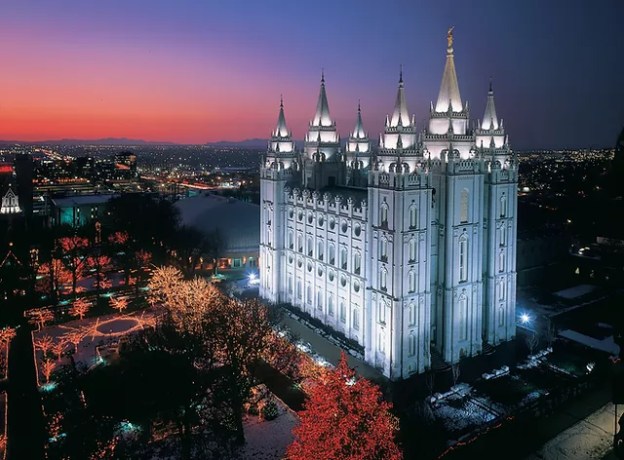
Religious revivals were common in the Finger Lakes region of New York in the early 19th century. A young farm boy named Joseph Smith was encouraged to become a part of such a movement. This teenager went into a grove of trees near his home to ask God which church was right. God the Father and Jesus Christ appeared to him and declared that all the churches were wrong, and all their creeds were an abomination in God’s sight. Smith was told to join none of the churches. This is a significant event, called the “First Vision” in Mormonism.

Later Joseph was visited by an angel named Moroni. Moroni revealed to him the existence of a set of golden plates on which was inscribed the history of the ancient people of the New World. After several years, Smith was allowed to remove these plates from where they had been buried on a hillside, a hill called Cumorah. Through supernatural means, Joseph Smith was able to translate the plates. The translation became a book called The Book of Mormon, which was published in 1830. Later that year Smith organized a church which he claimed was the true, restored church of Jesus Christ.

Thus was born the American home-grown religion of Mormonism. This religion, officially known as the Church of Jesus Christ of Latter-day Saints, is one of the most bizarre religions ever concocted by man (or devil). Many whole books have been written describing the complicated and confusing teachings of the Mormon Church. Allow me to just summarize a few of these:

• God is an exalted man, and has a physical body
• God has spiritual wives in heaven, who give birth to spirit children.
• We were all born as spirit children in a place called the First Estate
• The Fall was necessary for salvation to occur.
• The Father and Son are two separate beings—two different gods
• God is the literal father of Jesus in the flesh
• The LDS Church is the only true church
• The LDS are the true Israelites
• The living Prophet and President of the Church is inspired and speaks for God
• God has restored the priesthoods through Joseph Smith and the LDS Church.
• The two priesthoods are necessary for salvation. These priesthoods are the Aaronic and Melchizedek.
• Baptism is the new birth; and baptism forgives us of our sins
• There are secret Temple ceremonies, based on Freemasonry, which a devout Mormon is expected to observe.
• You can be baptized for the dead
• We must work and obey all of God’s commands to have eternal life
• There are three heavens (but only Mormons go to the third and highest heaven)
• There is a process of eternal progression—people can go from being born as spirit children, to becoming physical beings, to exaltation as a god.
• Being sealed in a Temple marriage ceremony is required for eternal life
• You can become a god
• Once deified you will have your own spirit children

Summary of Beliefs

God: God is an exalted, resurrected man, with a physical body. There are many gods. The
trinity consists of three separate gods.
Jesus: Jesus was the first-born spiritual son of God in spiritual realm. He was born of a literal
physical relationship between God and Mary. Jesus had to advance to become a god.
Salvation: All men are saved by grace in the sense that they can be resurrected. But to achieve
eternal life in the highest heaven requires baptism, good works, the priesthood, and
Temple work.
Human nature: We are “gods in embryo” and have the potential to advance to become gods.
Sin: There is no such thing as original sin. Each person is accountable for his own sins.
Afterlife: There are three heavens. Only good Mormons go to the highest heaven. There is a
hell, but it is temporary for most people. There is a strong belief in bodily resurrection.
Scripture: There are four standard works of Scripture: the Bible, the Book of Mormon, Doctrine
and Covenants, the Pearl of Great Price.
Truth: Truth is revealed by God, through the Scriptures and through living prophets. God can
redefine and alter truth as need be. The words of a living prophet are more important
than the written Scriptures.